Are you expecting a baby and have questions about paternity? Or maybe you’re a concerned father wanting to establish legal paternity for your child. Whatever your situation may be, you’re probably wondering if there’s a way to do a paternity test from the comfort of your own home. The good news is, there is! In this blog post, we’ll dive into the world of non-invasive prenatal paternity testing and explore how you can get answers without ever leaving your home.
What is a Non-Invasive Prenatal Paternity Test?
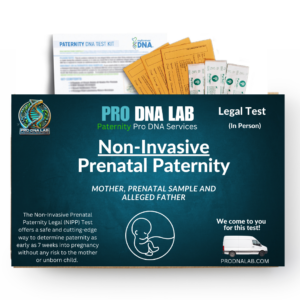
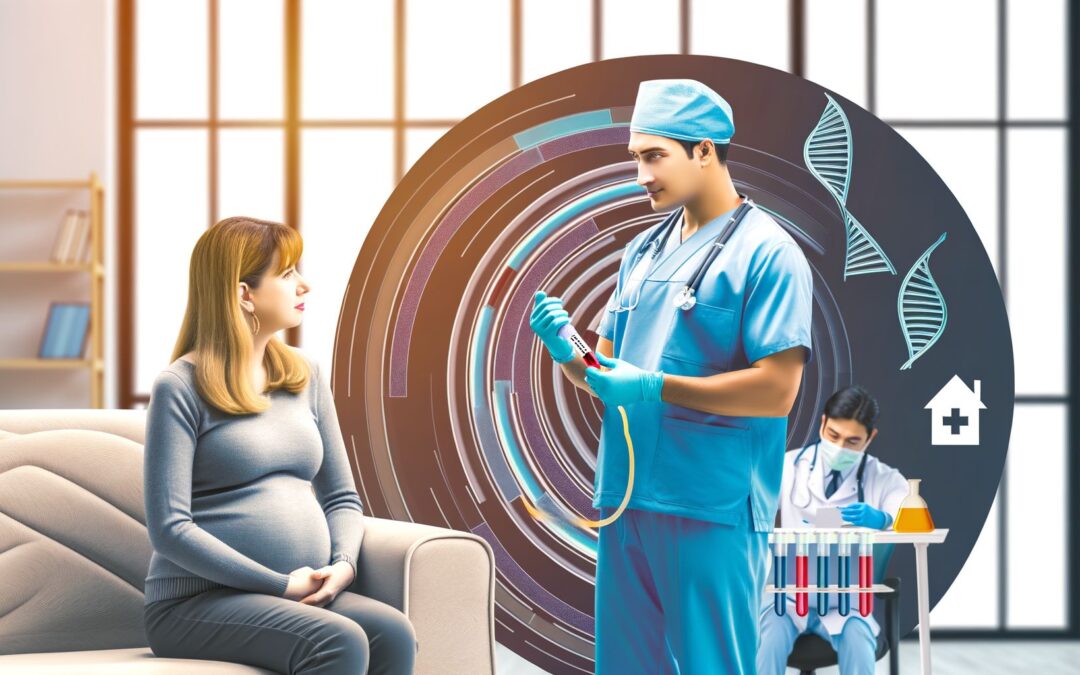
A non-invasive prenatal paternity test, also known as an NIPP test, is a type of DNA test that can determine the paternity of a child while the mother is still pregnant. This test involves taking a sample of the mother’s blood and a cheek swab from the potential father to compare their DNA. Since the test is non-invasive, it does not pose any risk to the mother or the baby.
How is it Different from a Legal Paternity Test?
A legal paternity test, on the other hand, is done after the baby is born and involves collecting samples from the child, the mother, and the potential father. This test is used to establish legal paternity for purposes such as child custody, child support, and inheritance. It is important to note that a legal paternity test must be done at a certified laboratory and cannot be done at home.
How Accurate is the Test?
Non-invasive prenatal paternity tests have a high accuracy rate of 99% or more, when performed correctly. However, it is recommended to wait until the mother is at least 8 weeks pregnant for the most accurate results. The earlier the test is done, the higher the chance for discrepancies due to the small amount of fetal DNA present in the mother’s blood.
Common Misconceptions or FAQs
- Myth: Non-invasive prenatal paternity testing is not safe for the mother and the baby.
- Fact: This test is completely safe for both the mother and the baby, as it does not involve any invasive procedures. It only requires a simple blood sample from the mother and a cheek swab from the potential father.
- Myth: Non-invasive prenatal paternity testing is not reliable.
- Fact: As mentioned earlier, this test has a high accuracy rate of 99% or more when done correctly. However, it is important to choose a reputable and certified lab for accurate results.
- Question: Can I do a non-invasive prenatal paternity test if I’m carrying twins?
- Answer: Yes, it is possible to determine the paternity of twins with this test. However, it may be more expensive and the results may take longer to process.
Summary
In summary, a non-invasive prenatal paternity test is a safe and accurate way to determine the paternity of a child while the mother is still pregnant. It is different from a legal paternity test and must be done at a certified lab. While it is possible to do the test earlier in the pregnancy, it is recommended to wait until the mother is at least 8 weeks pregnant for the most accurate results. And remember, always choose a reputable and certified lab for accurate results.
This blog post is for informational purposes only and does not replace professional medical or legal advice.
Ready to get answers?
If you’re considering a non-invasive prenatal or legal paternity test, Pro DNA Lab is here to help. Our team of experts is dedicated to making DNA testing simple, private, and accessible for families who need clarity and peace of mind.
- 📞 Call us at (866) 644-4362
- 🌐 Visit: https://prodnalab.com
- 📧 Email: info@prodnalab.com
Author: Marvin Thomas
Founder of Pro DNA Lab
Marvin leads Pro DNA Lab with a mission to make DNA testing simple, private, and accessible for families who need clarity and peace of mind.